
Soil Temperature Sensors
Ideal soil temperature is essential for plant growth, as crop seeds need the right temperature for successful germination. When soil temperatures are optimal, crop growth rates increase. Using soil temperature sensors to monitor and maintain the soil within the proper range for crop development can boost productivity and enhance agricultural income.
A soil temperature sensor is a device designed to measure and track soil temperature. It detects temperature variations in the soil, converts this information into electrical signals, and transmits it to the user for analysis and application.
Soil Temperature Sensors are widely used in the following fields:
Agriculture: In agricultural production, soil temperature is a key factor influencing crop growth and development. A soil temperature sensor helps monitor soil conditions, enabling farmers to better understand the soil environment. This information allows them to make informed decisions about planting, irrigation, fertilization, and other agricultural practices, ultimately improving crop yield and quality.
Environmental monitoring: In environmental monitoring, soil temperature sensors provide real-time, continuous data on soil temperature. This information is valuable for assessing soil quality, predicting climate change, and studying energy exchanges within ecosystems.
Geological exploration: In geological exploration, data from soil temperature sensors aids in understanding underground geological structures, identifying the presence of groundwater, and evaluating the potential for resource extraction.
Soil ecological research: Soil temperature is a key indicator of soil ecosystem activity. By using soil temperature sensors, real-time monitoring of temperature changes can provide valuable data for studying ecological processes such as soil biological activity and respiration rates.
Product Line
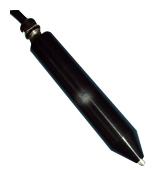
Model STS-5031 Soil Temperature
- Probe lengths available: 50 - 100 - 200 - 500 and 1000 mm
- Range: -10º a +50 ºC. (other ranges available).
- Accuracy: 0.1 ºC
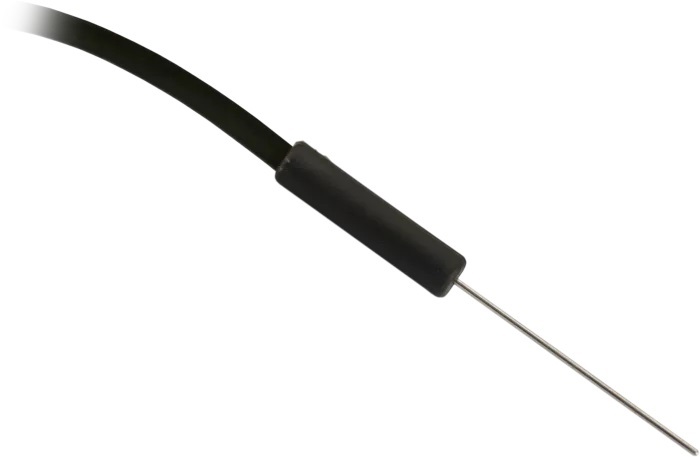
109SS-L
The 109SS is a rugged, accurate probe that measures soil or water temperature from -40° to +70°C. The 109SS consists of a thermistor encased in a sheath made from grade 316L stainless steel. The rugged stainless-steel sheath protects the thermistor, allowing you to bury or submerge the 109SS in harsh, corrosive environments. This probe also has a fast time response, and it can be easily interfaced with our data loggers.
Specifications:
- Output: Analog
- Operating Temperature Range: -40° to +70°C
Accuracy:
- ±0.60°C (-40 to +70°C)
- ±0.49°C (-20 to +70°C)
- Maximum Submergence: 45.7 m (150 ft) or 434 kPa (63 psi)
- Temperature Measurement Range: -40° to +70°C
- Thermistor Temperature Survival Range: -50° to +100°C
- Overmolded Joint and Cable Temperature Survival Range: -50° to +70°C
Interchangeability Error:
- ±0.6°C tolerance (-40°C)
- ±0.38°C tolerance (0°C)
- ±0.1°C tolerance (25°C)
- ±0.3°C tolerance (50°C)
- ±0.4°C tolerance (70°C)
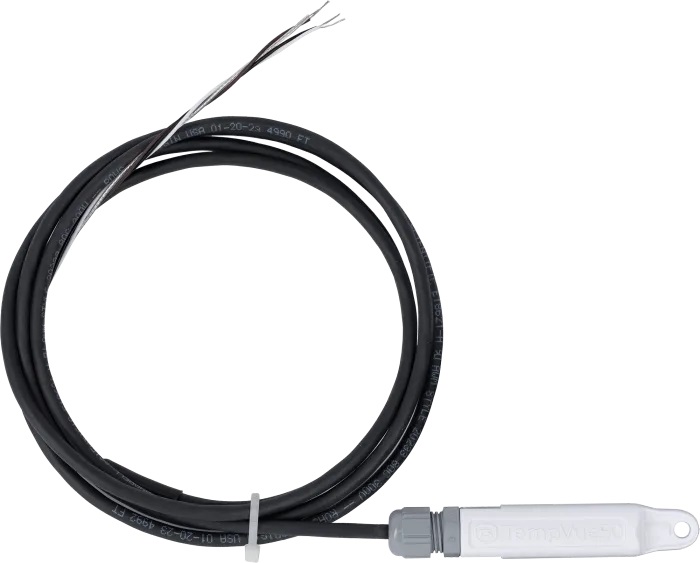
TempVue 50
The TempVue™50 is a high-precision digital water and soil temperature sensor that extends the high performance of the TempVue product line into the water. The TempVue 50 is a rugged and reliable sensor that exceeds United States Geological Survey (USGS) Office of Surface Water (OSW) specifications. The sensor is also plug-and-play with the Aspen ecosystem of Internet of Things (IoT) edge devices.
Specifications:
- Sensor Description: Digital silicon bandgap
- Time Constant in Air: 35 s (1 tau)
- Measurement Interval: > 15 s (recommended)
- Temperature Range: -40° to +60°C
- Measurement Uncertainty: 0.1°C (-10° to +60°C)
- Temperature Resolution: 0.01°C
- Maximum Submergence: 30 m (98.4 ft) depth
- Diameter: 17 mm (0.67 in.)
- Length: 95 mm (3.74 in.)